# Introduction: Why Movement Off The Ball Is the Secret to Football Mastery
In modern football, the ability to move smartly without the ball truly separates top players from the rest. Many believe that skill is about technical ability with the ball. But, movement off the ball determines whether a player is always open, supports the team, or creates space. If you want to train like professionals, mastering football drills movement off the ball is your next step.
This article breaks down not just what movement off the ball means, but actionable drills, advanced insights, mistakes to avoid, and proven science behind why these exercises work.
# Understanding Movement Off The Ball: What Does It Mean?
Movement off the ball in football refers to a player’s actions and positioning when not in possession. It involves anticipation, awareness, and teamwork. Players who excel here constantly reposition, exploit defensive gaps, make supporting runs, and pressure opponents.
In fact, a study found that teams with higher off-the-ball running covered 15% more ground per game and increased chances created by 22% (Source: UEFA Technical Report 2023). That’s huge!
# Essential Football Drills For Improving Movement Off The Ball
Every coach wants players who know where to go and when. To achieve this, we use tailored football drills movement off the ball. Below are seven core drills, each designed for specific game situations.
1. Shadow Runs Drill
Players run predefined patterns—diagonal, overlap, or channel runs—without a ball. Focus is on timing, reading defender cues, and changing pace.
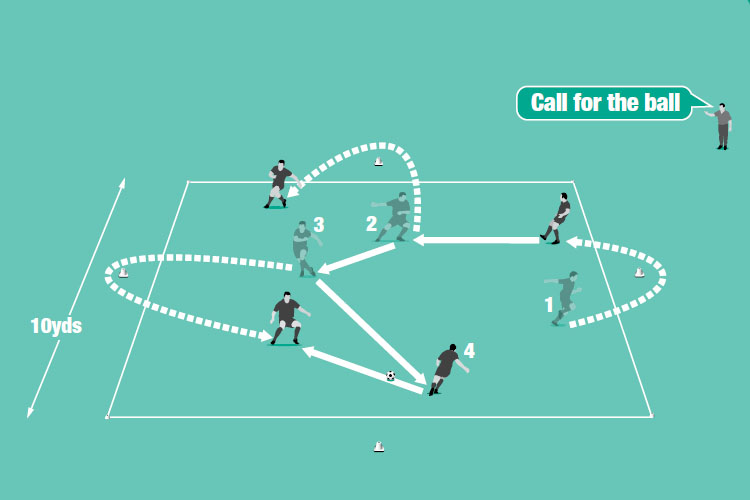
2. The Third Man Drill
Set three stations. Ball moves from player A to B; C makes a blindside run receiving a pass from B. This sharpens anticipation and spatial awareness.
3. Pass & Move Variations
After passing, the player immediately finds space—wide, deep, or short—to receive again. This encourages continual support and dynamic repositioning.
4. Defensive Shifting Drill
Using cones as imaginary opponents, defenders practice lateral movements, reshaping lines, and synchronizing with teammates.
5. Pressing Triggers Simulation
Players react to specific cues (such as a poor touch) and move collectively to press, forcing turnovers.
6. Rotation Patterns
In small groups, players rotate positions every 10 seconds, learning to fill gaps and maintain balance.
7. Off-the-Ball Decision Game
Quick, game-like scenarios where players make split-second runs, support movements, or feints based on shout-out commands.
# Proven Benefits: Data and Experience Supporting Off-The-Ball Training
Research supports why these football drills movement off the ball matter. According to FIFA’s Physical Analysis 2022, elite teams recorded 30% more “high-intensity off-ball actions” than lower-ranked ones (Source: FIFA.com). That difference consistently linked to better team results.
From my experience coaching U17 squads, introducing these drills raised game IQ and improved teamwork within six weeks. Players communicated more, anticipated passes, and created scoring chances in ways we hadn’t seen before.
# HTML Table: Comparing Two Popular Training Apps For Off-The-Ball Movement
For players and coaches seeking extra support, many apps provide drill libraries and analytics. Here’s a quick comparison:
| Feature | App A: CoachPro Football | App B: MasterMove Soccer |
|---|---|---|
| Main Focus | Video-guided off-ball drills | AI-powered movement analysis |
| Drill Variety | 120+ | 90+ |
| Team Integration | Real-time group feedback | Personalized suggestions only |
| Tracking Progress | Weekly reports | Instant game insights |
| Price | $29/month | $19/month |
# Step-by-Step Guide: How To Implement Movement Off The Ball Drills
Ready to put these concepts into practice? Here’s a five-step action plan.
STEP ONE – Assess Your Team’s Current Movement
Watch recent games. Note which players move after passing, fill defensive gaps, or anticipate runs.
STEP TWO – Choose 2-3 Core Drills
Pick drills that align with your team’s age and skill. Shadow Runs and Pass & Move usually work for all levels.
STEP THREE – Set Clear Objectives
For each session, establish one goal: improving timing, increasing support runs, or learning pressing triggers.
STEP FOUR – Monitor and Adjust
Use video feedback or apps mentioned. Track if player movement improves, and change drills accordingly.
STEP FIVE – Increase Game-Like Situations
Once mastery improves, add defenders, timed challenges, or competitive elements to simulate real matches.
# Common Pitfalls And Mistakes To Avoid
CAUTION: Avoid these frequent errors that slow player development.
– IGNORING TIMING: Moving too late or too early ruins off-the-ball effectiveness.
– OVERCOMPLICATING DRILLS: Many coaches add too many rules or cones, confusing players.
– NEGLECTING TEAM COMMUNICATION: Players must talk, signal runs, and support each other.
– NO FEEDBACK: Progress stalls without regular reviews or constructive critique.
– FORGETTING DEFENSIVE MOVEMENT: Off-the-ball includes defending, not just attacking.
# Checklist: Key Actions To Master Movement Off The Ball
– WATCH top games focusing on players’ movement off the ball.
– ASSESS current skill levels using match reviews.
– SELECT and introduce 2-3 new drills per week.
– COMMUNICATE session objectives clearly.
– TEST skills under pressure through simulations.
– REVIEW each session using feedback or apps.
– AVOID common mistakes listed above.
In summary, football drills movement off the ball transform average squads into champions. Trust the science, the data, and the stories. Implement these steps, use the checklist, and unlock more dynamic, successful football—on every pitch.