# NFL Offense Positions Explained: Everything You Need to Know
Understanding NFL offense positions is crucial whether you’re a diehard fan, fantasy football rookie, or simply want to decipher the action on Sundays. Offensive football isn’t just about touchdowns; it’s about strategic roles working in perfect harmony. So, what are the main NFL offense positions, how do they differ, and why do they matter so much? This in-depth guide unlocks all the answers—and more.
# The Core Structure of NFL Offense Positions
At the heart of every play are 11 players, each with a distinct job. NFL offense positions can be grouped into several key categories:
– The Quarterback: The brain and arm of the operation.
– Skill Positions: Wide receivers, running backs, and tight ends—your playmakers.
– Offensive Line: The unheralded force, including tackles, guards, and the center.
But simply naming them doesn’t tell the full story. Let’s break each down, explain their skills, and discover why every position matters.
# Quarterback: The Field General
The quarterback is the unmistakable leader of NFL offense positions. Their responsibilities include:
– Reading defenses and calling audibles.
– Delivering accurate passes under pressure.
– Orchestrating every play, from snaps to handoffs.
A QB’s football IQ is often as critical as their arm strength. For example, according to NFL.com, top quarterbacks average over 30 passing attempts per game, often making crucial split-second decisions (Source: [NFL.com Stats]).
# Skill Positions: Makers of Magic
This group includes running backs (RB), wide receivers (WR), and tight ends (TE). Here’s how they differ:
| Position | Primary Role | Key Skills |
|---|---|---|
| Running Back (RB) | Rushing, pass catching, blitz pickup | Speed, agility, strength, vision |
| Wide Receiver (WR) | Route running, catching, stretching defense | Speed, hands, body control |
| Tight End (TE) | Double as blockers and receivers | Versatility, blocking power, catching |
Wide receivers often attract the spotlight for deep catches. According to a 2023 Pro Football Focus report, the average NFL team uses three WR sets in over 60 percent of passing downs (Source: [Pro Football Focus]). By contrast, tight ends bridge the gap between protection and attack, making them one of the most versatile NFL offense positions.
# Offensive Line: The Hidden Heroes
Every explosive play starts with the offensive line: left tackle, left guard, center, right guard, right tackle. Their job is to:
– Protect the quarterback from sacks.
– Open running lanes for ball carriers.
– Avoid penalties and mental errors.
Left tackles, in particular, face the defense’s best pass rushers. According to my experience coaching high school football, having a reliable offensive line turns good teams into great ones.
# Formations and Flexibility: How NFL Teams Get Creative
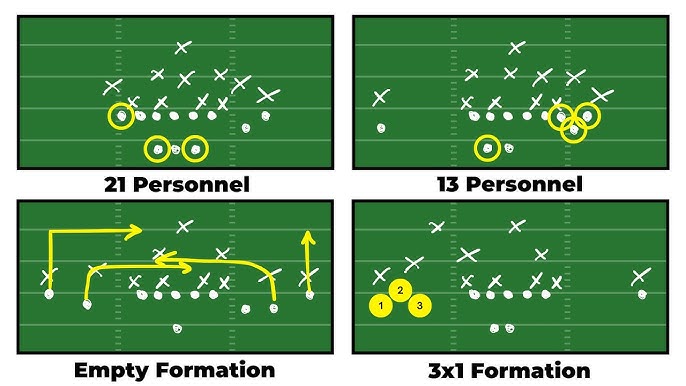
NFL offense positions aren’t static! Coaches constantly shift personnel to create mismatches:
– The spread offense uses more wide receivers for speed.
– Two-tight end sets (called “12 personnel”) boost blocking and confuse defenses.
– Motioning players pre-snap reveals defensive coverages.
– Hybrid roles like the H-back or slot receiver add wrinkles.
This flexibility means teams can adapt to opponents and highlight their stars’ strengths.
# Step-By-Step Guide: Mastering NFL Offense Positions
If you want to truly understand NFL offense positions, follow this action plan:
1. WATCH game broadcasts focusing on player alignment before the snap.
2. IDENTIFY each position by looking for uniform number ranges and alignment rules.
3. TRACK substitutions and formation changes between downs.
4. NOTICE who is responsible for blocking versus receiving on pass plays.
5. ANALYZE player statistics (yards gained, receptions, sacks allowed) for context.
# Common Pitfalls When Learning NFL Offense Positions
ATTENTION: Many fans make assumptions that lead to confusion. Here are top mistakes to avoid:
– THINKING all running backs are just for carrying the ball—many are top receivers too!
– ASSUMING wide receivers don’t block—some, especially in run-heavy schemes, are excellent blockers.
– IGNORING the importance of the center, who calls out protections and sets the tempo.
– FORGETTING tight ends often block as much as they catch passes.
Getting these facts straight drastically boosts your football IQ.
# Real-World Example: How a Play Unfolds
Let’s visualize a typical play. The quarterback lines up in shotgun. There’s one running back, three wide receivers, and a tight end. On the snap:
– Offensive linemen form a protective pocket.
– The running back scans for a blitz, then leaks out for a short pass.
– Two wide receivers race deep, stretching defenders.
– The tight end chips a pass rusher, then curls into an open zone.
– The quarterback quickly reads these options, then delivers a pass for the first down.
Each NFL offense position executes a vital task, and when done right, the result ignites the crowd.
# NFL Offense Positions Versus Defensive Counterparts
Curious how duties compare on the other side of the ball? Here’s a quick comparison:
| Offensive Position | Defensive Counterpart | Main Objective |
|---|---|---|
| Quarterback | Linebacker/Safety | Attack vs. Read/React |
| Wide Receiver | Cornerback | Create separation vs. Cover |
| Running Back | Linebacker | Exploit gaps vs. Fill gaps |
| Tight End | Safety/Linebacker | Mismatch vs. Versatility |
| Offensive Line | Defensive Line | Block vs. Penetrate |
See how each role drives the chess match of football?
# Checklist: How to Quickly Recognize NFL Offense Positions on the Field
– LEARN jersey number ranges for each position group.
– OBSERVE offensive formations: singleback vs. I-formation vs. trips.
– SPOT pre-snap motion and personnel changes.
– FOCUS on which players start the play in the backfield or on the line.
– WATCH how skill positions arrange on passing downs.
Whether you dream of coaching, love fantasy football, or crave understanding the real action, mastering NFL offense positions turns every game into an expert experience.
Ready to impress your friends on game day? Refer back to these secrets, and you’ll never look at the line of scrimmage the same way again!