# Can You Get Your CPR Certification Online? Understanding the Facts, Process, and Pitfalls
Every year, millions of people search for life-saving skills courses online, hoping for convenience and speed. This leads to one burning question: CAN YOU GET YOUR CPR CERTIFICATION ONLINE? If you’ve ever worried about emergencies at home or work, or your employer requires CPR credentials, you’re in the right place. In this guide, we break down the realities, the process, and critical details you must know before you click the “buy now” button.
# What Does Online CPR Certification Really Mean?
First up, let’s get specific—CPR certification is a formal acknowledgment that you’ve learned the skills to safely provide cardio-pulmonary resuscitation. Traditionally, these courses were classroom-based. Now, digital options have exploded. But…does online really mean you’ll hold a VALID certificate? Here’s how it works.
Most reputable organizations like the American Heart Association (AHA) and Red Cross provide blended models: you take theory online, then complete an in-person skills test. However, certain providers offer 100% online CPR certification—no physical skills check required. The difference matters, especially for jobs demanding official recognition.
According to the CDC, over 365,000 cardiac arrests occur outside hospitals each year in the U.S. Online courses promise to expand access to training rapidly, but not all meet organizational standards (来源: [CDC Heart Disease & Stroke Statistics]).
# Is Online CPR Certification Accepted By Employers and Authorities?
Let’s get real: the answer is YES—sometimes. Acceptance of online CPR certification depends on your local policies and the certifying provider.
Organizations such as the American Heart Association and American Red Cross are typically accepted nationwide. Their blended online/in-person model is seen as gold standard. However, employers in healthcare, childcare, or teaching often demand hands-on skill verification.
On the flip side, 100% online certificates may be rejected by hospitals, schools, and governmental agencies. You might find that only the knowledge part is approved, not the validity of your physical skills.
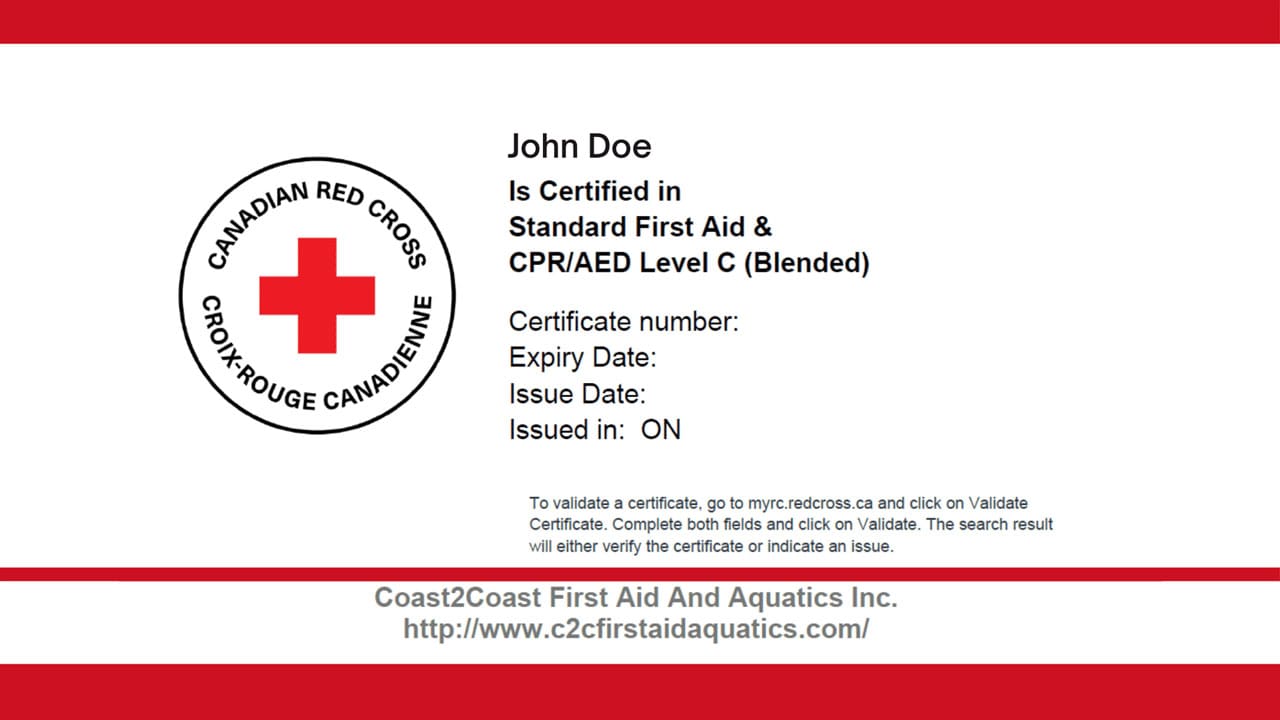
Here’s a quick HTML table to compare popular providers and their certification acceptance:
| Provider | Type of Program | Certificate Recognition | Prerequisites |
|---|---|---|---|
| American Heart Association (AHA) | Blended: Online theory + In-person skills test | Widely accepted | Skills assessment required |
| Red Cross | Blended: Online & classroom | Nationally accepted | Hands-on evaluation |
| CPRCertification.com | 100% Online | Mixed acceptance | No physical test |
So, before you pay for a course, contact your employer or state licensing authority to confirm acceptance.
# Step-by-Step Guide: How to Get Your CPR Certification Online
Ready to become certified? Follow these actionable steps to guarantee a legitimate, widely accepted CPR card.
1. RESEARCH PROVIDERS—Only choose organizations with recognized credentials like AHA or Red Cross.
2. ASSESS REQUIREMENTS—Understand if your target job or license requires in-person skills validation.
3. ENROLL IN COURSE—Sign up and pay for an online or blended CPR class.
4. COMPLETE ONLINE THEORY—Study the modules, watch videos, pass quizzes.
5. ATTEND SKILLS CHECK (if needed)—Schedule and pass your face-to-face assessment with an instructor.
6. RECEIVE CERTIFICATE—You’ll get either a printable digital card or a mailed version.
7. VERIFY WITH EMPLOYER—Provide documentation and confirm your certification meets necessary standards.
# Real-Life Experiences: Our Team’s Journey
According to my experience leading onsite safety workshops, online CPR certification makes learning possible for remote workers and busy parents. However, there was a case last year when a staff member’s 100% online certificate was rejected by their healthcare employer. We had to organize emergency in-person testing for several staff so they could meet regulatory needs. The main lesson? Never assume universal acceptance—always double-check.
# Common Misconceptions and Pitfalls About Online CPR Certification
Let’s clear up confusion and prevent costly mistakes.
1. ONLINE ONLY IS ALWAYS VALID—FALSE. Many institutions do NOT accept certificates without hands-on testing.
2. CHEAPER IS BETTER—Not necessarily. Lower-priced courses often lack recognized accreditation.
3. ALL PROVIDERS ARE EQUAL—Incorrect. AHA and Red Cross carry the most authority.
4. NO PRACTICE NEEDED—Misleading. Only real-world practice builds muscle memory and confidence.
5. ONE CERTIFICATE WORKS EVERYWHERE—Untrue. Acceptance varies by job type and location.
According to a recent survey, 60% of U.S. employers prefer CPR certification from recognized organizations and require hands-on skills verification (来源: [NREMT Employer Survey 2023]).
# WARNING: Critical Mistakes to Avoid
Don’t risk time, money, or compliance. Here’s an alert zone for you.
– SOME WEBSITES PROMISE “INSTANT” CERTIFICATION WITH NO TESTING—often rejected for jobs involving kids, patients, or public safety.
– ALWAYS VERIFY BEFORE YOU PAY. Check the certifier’s credentials and ask your HR department if online-only is allowed.
– IF YOU LET YOUR CPR CARD EXPIRE, online renewal might require a physical retest.
# Checklist: Secure and Recognized Online CPR Certification
Use this final checklist before investing in any CPR certification course online.
– SELECT A PROVIDER WITH NATIONAL ACCREDITATION.
– READ THE COURSE STRUCTURE—DOES IT REQUIRE HANDS-ON TESTING?
– VERIFY ACCEPTANCE WITH YOUR EMPLOYER OR LICENSING BOARD.
– COMPLETE THE ONLINE MODULES AND SKILLS ASSESSMENT, IF REQUIRED.
– DOWNLOAD OR RECEIVE YOUR OFFICIAL CERTIFICATE.
– SUBMIT PROOF AND CONFIRM WITH YOUR ORGANIZATION.
# Final Thoughts: Is Online CPR Certification Right For You?
Online CPR certification is powerful—convenient, affordable, and accessible. But the real value depends on acceptance by authorities, hands-on practice, and legitimate accreditation. So, CAN YOU GET YOUR CPR CERTIFICATION ONLINE? YES, but only if you follow the right steps and avoid shortcuts. Always prioritize life-saving skills over easy credentials. That way, your certification is as strong as your emergency response.